
Conservative Treatment
Conservative treatments are non-surgical, non-invasive methods used to improve or correct pectus deformities.
Pectus Matters is dedicated to advocating for a clinical pathway for pectus care which prioritises early intervention with conservative treatment. This gives patients the best chance of complete correction, minimises the chances of patients developing physical symptoms, and prevents people from having to have major cardiothoracic surgery in the future.
Below, you find a list of the most common conservative treatments offered to patients.
Vacuum bell therapy
What is a vacuum bell?
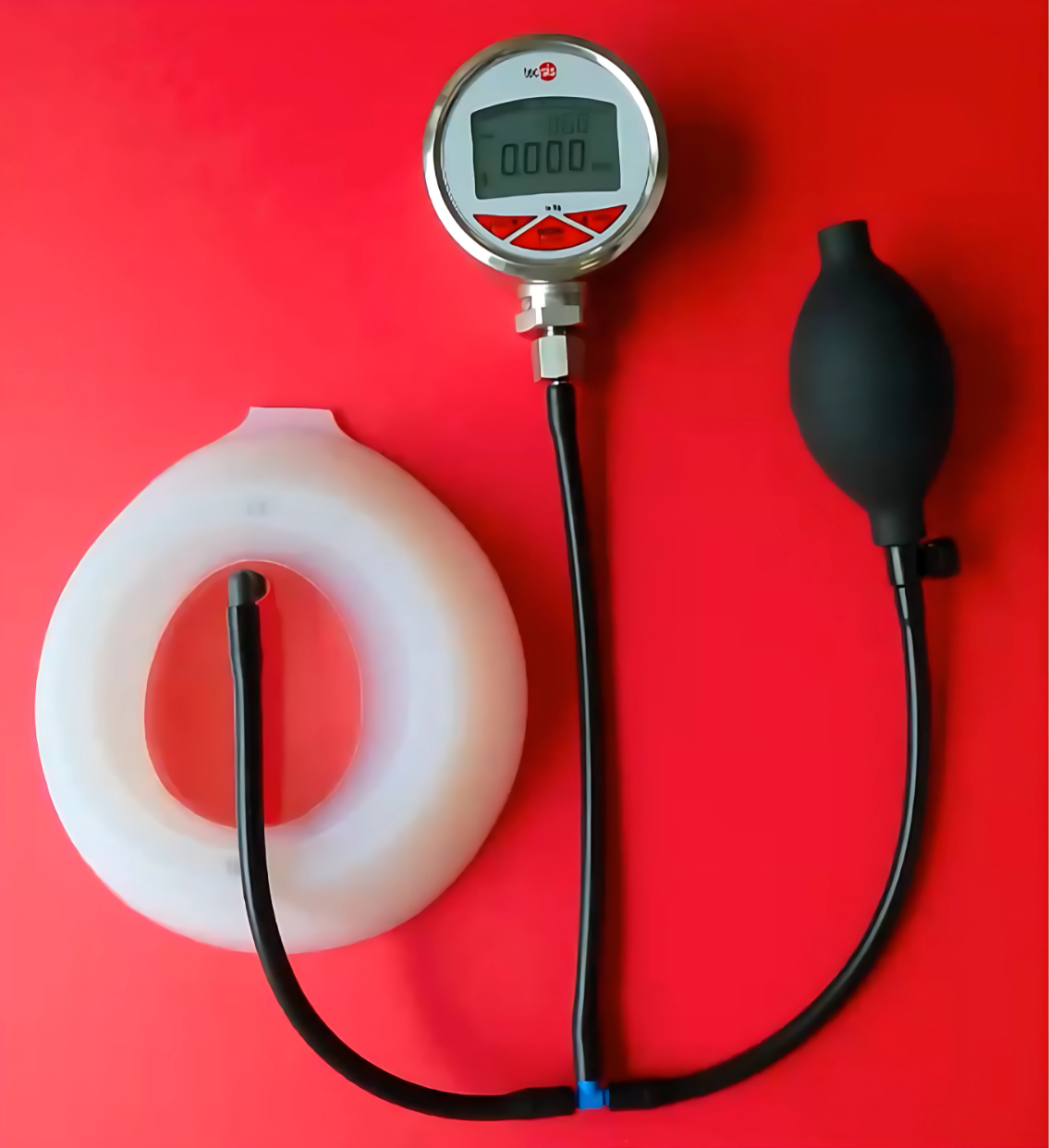
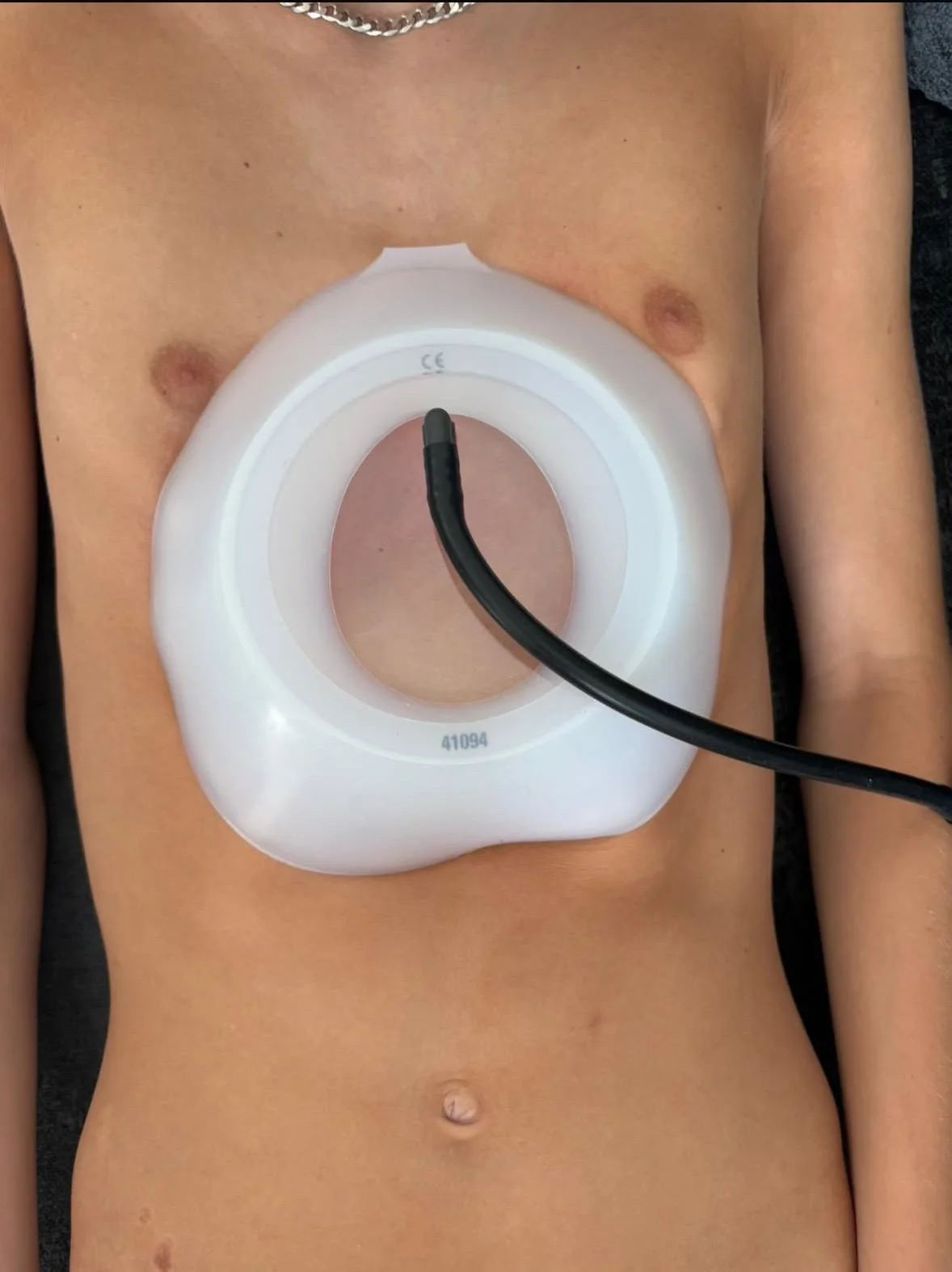
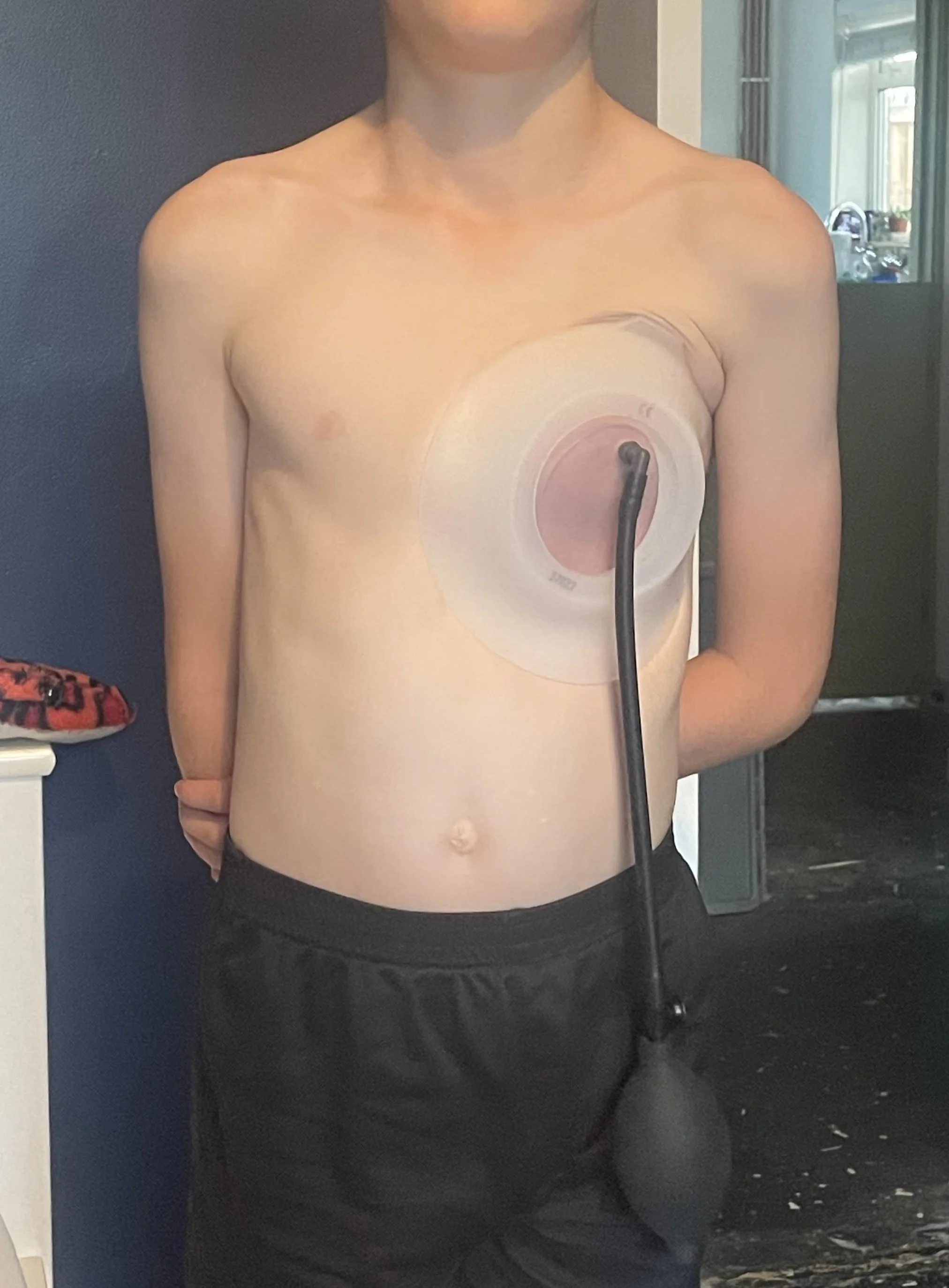
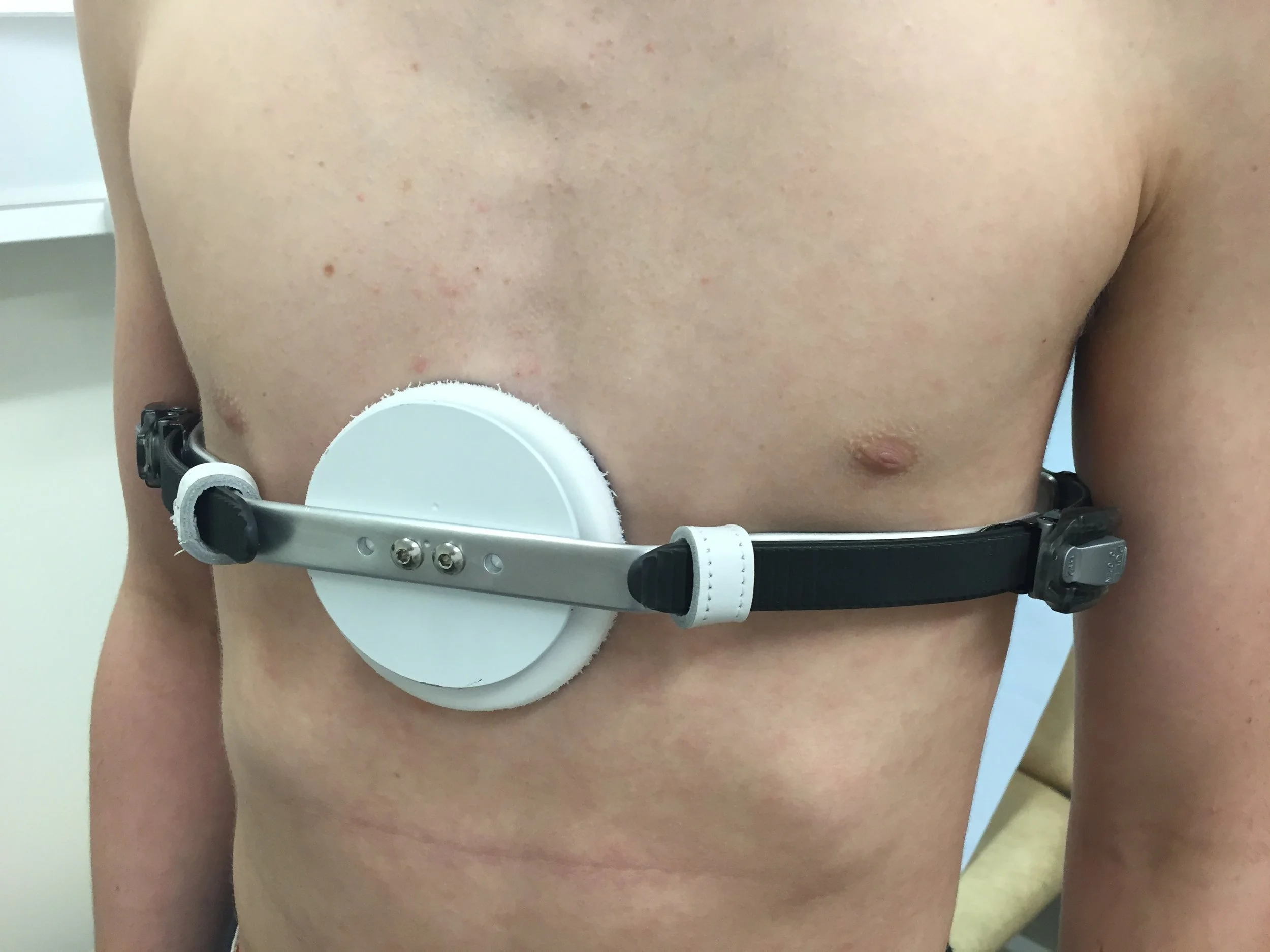
A Vacuum Bell is a non-invasive device that provides a suction over the indented part of your chest to try and lift the sternum and improve its chest. It is most commonly used by young people who have pectus excavatum or a mixed deformity, to help elevate the sunken area of the sternum.
The vacuum bell sits over the indented area of the chest and is pumped up using a hand pump or an electric pump. The level of suction is to be agreed with your orthotist or other health care professional. They will give you clear instructions on the number of “pumps” needed for your size of vacuum bell and specific chest shape. Everyone is different.
Who can use a vacuum bell?
The Vacuum Bell can be prescribed to patients between the ages of 6 and 60 with pectus excavatum. Successful results are seen most frequently in children and teenagers, ideally starting treatment before puberty begins. This is because the sternum and chest wall is generally more flexible the younger you are, meaning it is more difficult to achieve perfect results the older the patient is. This does not mean that adults cannot wear or achieve good results with the vacuum bell . DID YOU KNOW - Eckart Klobe, who invented the vacuum bell, wore the device in his 30’s and 40’s and achieved significant improvement in his pectus excavatum!
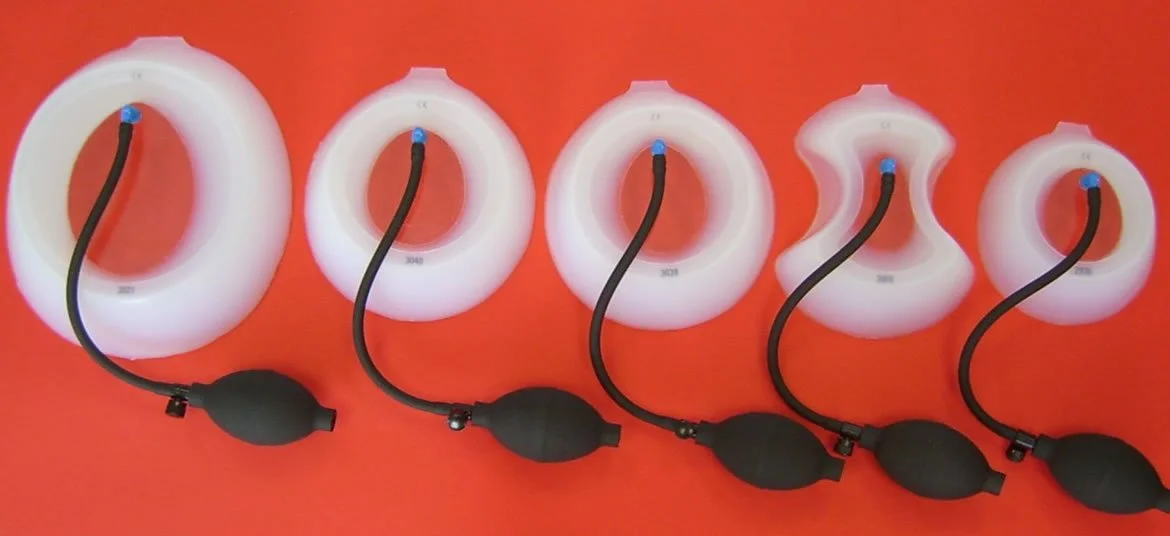
The device is produced in multiple sizes with one female version to accommodate the breasts. This allows the orthotist or health professional to choose a device that is most suitable for your chest shape.
Vacuum Bell’s are medical devices and must be fitted and demonstrated to patients, to ensure safe and proper use. Regardless of whether you get your vacuum bell prescribed through your local hospital via the NHS or you purchase it privately, you should seek the advice of a cardiothoracic consultant, orthotist or suitably trained healthcare professional, to ensure that the device is being worn and used correctly.
How do I use the vacuum bell?
To begin with, the device is worn for short periods of time with 2 sessions of 15 minutes increasing to 2 sessions of 2 hours a day. You should be able to wear the vacuum bell and move around the house. Most people choose to wear the vacuum bell in the home, but others will wear it for light activities outside the home.
Your orthotist or health care professional will advise you how many pumps to use to get a safe and comfortable pull from the vacuum bell. This may change throughout treatment as your chest shape changes. In some cases you will build up to wearing the vacuum bell for much longer periods, including during sleep.
How do you get measured for a vacuum bell?
Your orthotist will measure the shape of your chest to get an understanding of the size and depth of the indentation. They may also take photographs and/or a 3D surface scan of your chest so that they can monitor the change in shape over time. They will choose the best shape and size of vacuum bell for your chest and will explain how to use the vacuum bell.
Are there any problems associated with using a vacuum bell?
Using the vacuum bell device can cause dizziness, muscle aches and bruising, as well as general pain and discomfort. Building the wear time slowly will allow the skin to become used to the pull of the vacuum bell. Aches and pains generally improve with time and a slower build up or simple pain relief, such as paracetamol, can be helpful when you start treatment. If you are struggling to get used to using your vacuum bell, contact your named health care professional.
Vacuum Bell’s are medical devices and must be fitted and demonstrated to patients, to ensure safe and proper use. Regardless of whether you get your vacuum bell prescribed through your local hospital via the NHS or you purchase it privately, you should seek the advice of a cardiothoracic consultant or orthotist, to ensure that the device is being worn and used correctly.
How long does treatment take?
The length of time the device must be used for will depend on how severe your pectus excavatum is, and how well your chest wall responds to the treatment. Typically, vacuum bell therapy will last around one to two years, but patients might be asked to use the device for longer, or to start using it again if their pectus excavatum comes back.
There is a small risk of the indentation coming back during periods of rapid growth. It is really important that you use your vacuum bell consistently for the recommended time to get the best results.
Who cannot use a vacuum bell?
The device can't be used by patients with:
Skeletal conditions such as Osteogenesis Imperfecta (brittle bones) or Osteoporosis
Vascular conditions of the central cardiovascular system such as an aneurysm (dilation of the arteries) or as a symptom of Marfan Syndrome, Ehlers-Danlos Syndrome or Loeys-Dietz Syndrome – connective tissue conditions. Connective tissue conditions in isolation are not a contraindication, but treatment should be approved or monitored by your paediatric surgeon.
Blood coagulation disorders such as Thrombopathy or Haemophilia or when taking strong anticoagulants such as Warfarin.
If the rib cage is reshaped or supported from within by an implant.
When flying or at high altitudes.
After diving.
Chest Bracing
What is a chest brace?
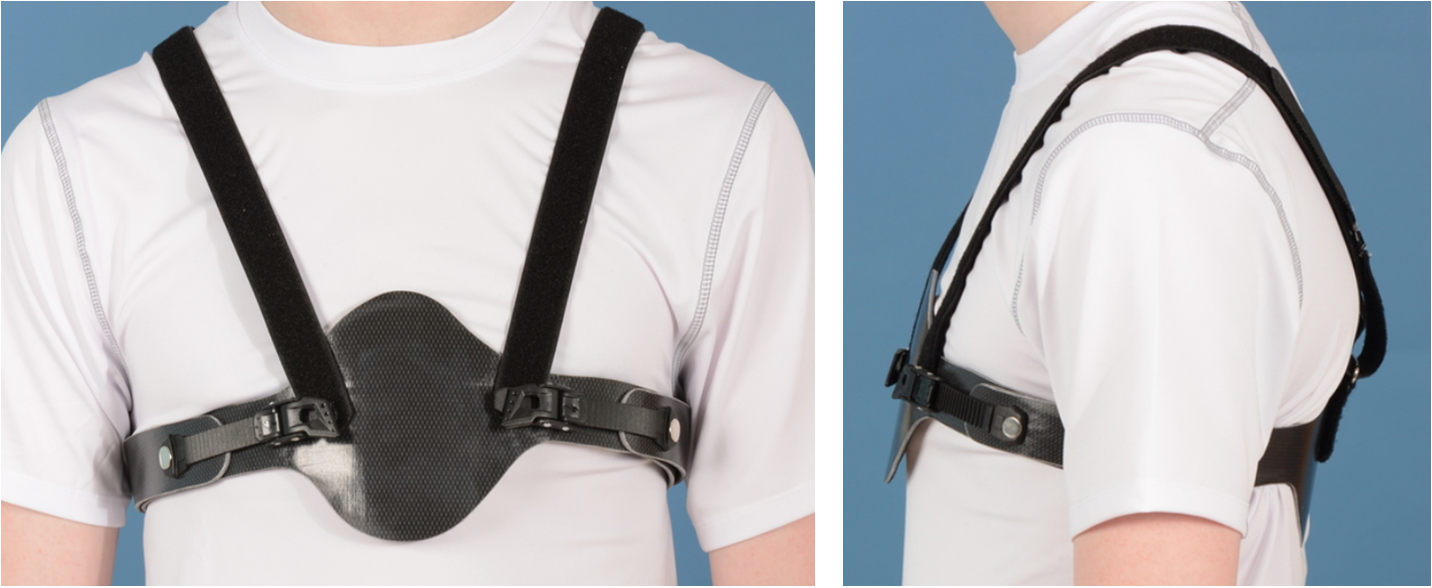
A chest compression orthosis or chest brace is a removable device which is used to correct the shape of pectus carinatum, where the sternum or chest wall has become prominent and sticks out. A chest brace might also be recommended for patients with rib flaring (which can occur alongside or because of a pectus condition).
There are a variety of designs of chest brace available. Each model varies in appearance, but all chest braces are made up of a central plate worn over the chest attached to a bar, with another pad at the back of the brace attached to a bar. These are connected by straps at the side which allow you to alter the pressure applied to your chest wall. The brace applies external pressure to the chest wall, helping to gently reshape the sternum over time. There are both custom made and ready-made designs.
The Scottish National Chest Wall Service (who routinely brace PC patients), find that they have a 92% success rate in patients who use the chest brace for 16 + hours a day.
Who can use a chest brace?
Bracing tends to be most successful in children and teenagers, as the sternum is softer and more flexible the younger you are. Flexibility of your chest wall is an important factor in achieving a successful result. Positive results can be seen in adults who have a flexible chest wall.
Motivation is very important in achieving a good result. Children over the age of 11 are more able to tolerate wearing with a chest brace. Bracing is often started earlier for girls due to breast development, as it is easier to use a chest brace before female puberty.
How do you get measured for a chest brace?
An orthotist (an allied health care professional who specialises in braces) will assess the shape of your chest wall and its flexibility. They will measure you to find out which will be the most appropriate brace for you. The orthotist may use an off-the-shelf chest brace, which will be adjusted to fit you. They may also make a cast or measurements with a 3D surface scanner (which is often attached to an iPad) to capture the shape of your chest, and make a brace designed specifically for your chest wall.
What happens at the fitting appointment?
During your first fitting, an orthotist will check that the brace fits well and covers the area of the sternum that protrudes. They’ll check to make sure the brace has room for you to breathe and move comfortably. They will show you how to put on and take off the brace, as well as how tight to use it. It is normal for your skin to be pink in the area where the pads press on your sternum. Your orthotist will explain how to build up your wear time.
How long do I have to wear my brace?
In the first couple of weeks, you gradually build up the number of hours the brace is worn. After this, the brace is worn for as long as possible during the day and during sleep (up to 23 hours). This is the corrective phase of treatment. Once your chest is flat you may move to a maintenance phase where you wear the brace overnight only. It is really important that you use your chest brace consistently, for the recommended time, to get the best results.
Are there any problems associated with using a chest brace?
Some people find it really challenging to wear a chest brace, as it can be visible under clothing. Starting by wearing the brace at home can help you adjust to the sensation and appearance of using the brace. Once your chest is flatter and you are more comfortable using the brace, you may feel more confident wearing it outside of the house, when it is less visible under clothing.
Wearing a chest brace can cause the skin on your chest to become sore or irritated. This can be worse if you have a more rigid sternum. If your chest becomes sore or bruises, remove the brace until the skin has healed and contact your orthotist. It may be that you are wearing the brace too tight and your orthotist may be able to help by adding extra shoulder straps or a softer pad to the chest brace, to improve your comfort.
There is a small risk of overcorrection of the deformity through chest bracing. If you notice that your chest starts to sink inwards instead of out, remove your chest brace and contact your orthotist. This generally resolves by removing the brace.
Who cannot use a chest brace?
If your chest wall is very stiff, the orthotist will not be able to provide a chest brace as the skin on your chest is unlikely to tolerate the pressure required to achieve a corrected shape.
Psychological Support
Having a pectus condition can have a big effect on your mental health, regardless of how mild or severe your deformity is. Accessing psychological support, such as Cognitive Behavioural Therapy or Counselling, can be beneficial for patients who are experiencing anxiety, depression, low self-esteem or poor body image because of their pectus condition.
Having a visible chest deformity can have a profound effect on your self-esteem. This can lead to patients having negative thoughts and feelings about themself, the way that they look, and how this reflects on them as a person. Examples of these negative thoughts might include:
I am deformed
I don’t want people to see me because of the way that I look
I am abnormal
I am weird
I look hideous
I hate the way that I look
If patients are self-conscious of their chest, they might alter their behaviours to avoid their chest being seen. Examples of this might include:
Avoiding sports or swimming
Avoiding social events or activities, instead choosing to stay home
Avoiding situations where their friends or family might see their chest
Feeling forced to wear certain types of clothing to hide the chest
Obsessively touching or looking at their chest in the mirror
Not wanting to talk about their pectus condition
Most people will experience changes in the shape of their sternum during puberty. Developing a deformity as a teenager – which can already be an emotionally tough time – can have an impact on a young person's body image and self-esteem.
For people whose pectus condition causes them physical symptoms, it is not uncommon for their mental health to suffer; this is especially the case in patients with severe deformities and people struggling to access treatment.
Experiencing physical symptoms like breathlessness, difficulty swallowing and tachycardia can be scary and managing them day-to-day can have a negative impact on your mental health. Patients might feel anxious and/or depressed as they struggle to manage their physical symptoms: particularly patients who are struggling to access care.
Cognitive Behavioural Therapy and counselling can provide pectus patients with a space to discuss how their condition is affecting them mentally. For some patients, this might be the first time they’ve spoken about their chest, or the only place that they feel comfortable acknowledging the effects their pectus condition is having on their mental health. Counsellors, psychologists and other mental health professionals provide a listening ear and encourage patients to challenge negative thoughts by setting small tasks or goals to work towards.
Here are some fantastic online mental health resources:




Physiotherapy
Physiotherapy can be used to assist recovery from surgery, in combination with vacuum bell therapy or chest bracing, or as an individual therapeutic option for patients with a mild pectus condition.
It’s important to note that physio and exercise alone will not reverse a deformity, but it can improve the overall appearance of the chest, strengthen the muscles around the sternum, and improve posture. Building the muscles in the chest can mask the appearance of milder pectus deformities, but it can also make them appear more obvious if it is more severe.
Exercise might be recommended specifically as part of a regimen by a physiotherapist or could just be part of your personal exercise routine. The exercises which are most often recommended to patients with pectus conditions:
Strengthen, stretch and mobilise the muscles in the chest
Build upper body strength
Focus on improving posture
Use deep breathing techniques
Improve general cardiovascular fitness
If you are using a vacuum bell or chest brace, you may be offered physiotherapy to complement the wearing of non-surgical devices. This could be sessions with a physiotherapist, or a simple list of exercises given to you when you have your device fitted.

Physiotherapy after pectus surgery
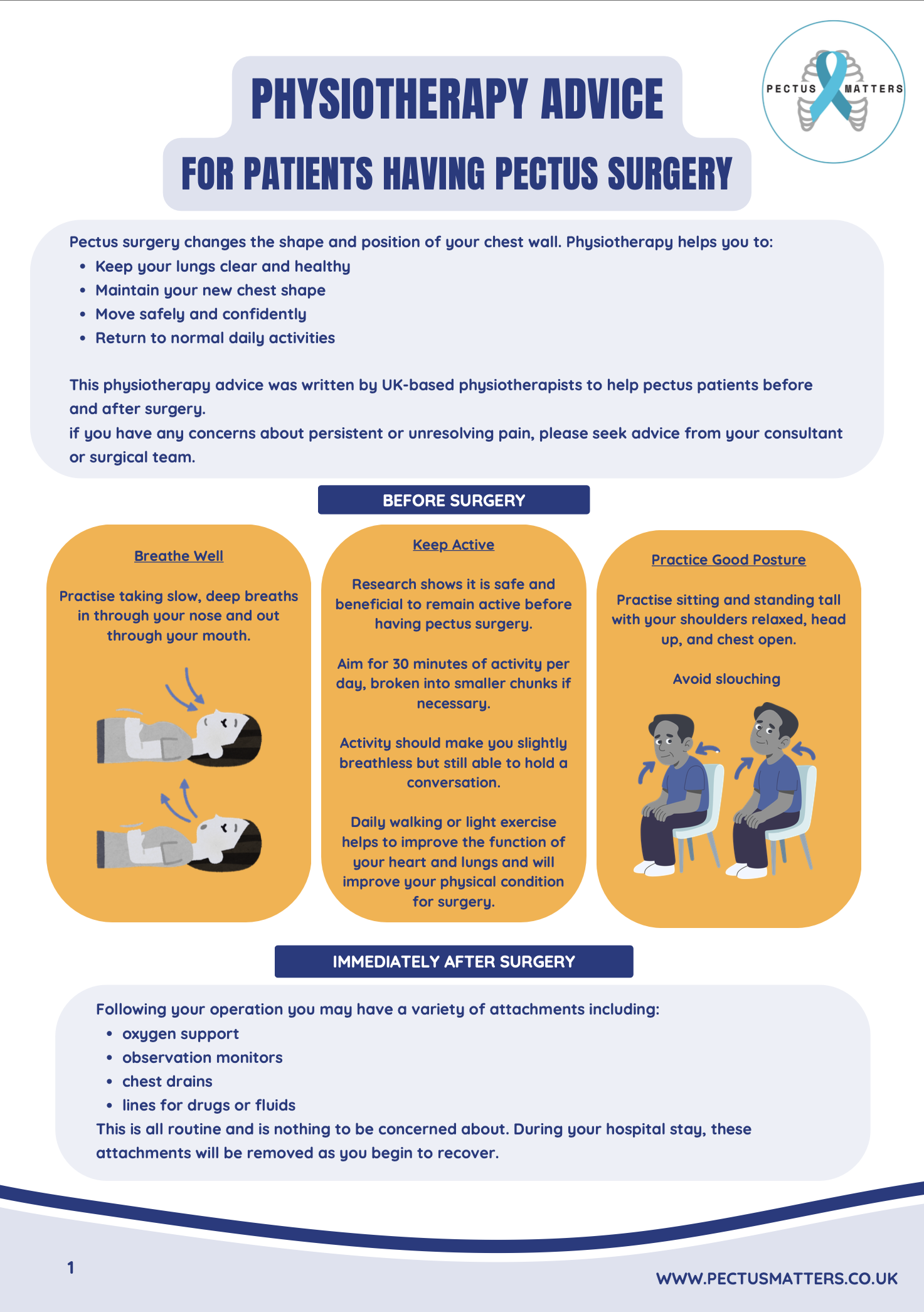
If you are having surgery to correct your pectus condition, you should be supported by a physiotherapist after surgery, whilst you are still in hospital. Typically, you will be encouraged to mobilise quickly and will be given physiotherapy exercises to practice at home once you have been discharged. The aim of these is to assist in your recovery, build strength around the chest, and reduce your risk of developing complications.
Scapular Setting exercise
Bench Pectoral Stretch exercise
Post-op physiotherapy advice