Treatment Options
Surgical treatment
Pectus Matters is dedicated to advocating for a clinical pathway for pectus care which prioritises early intervention with conservative treatment.
For patients with pectus conditions that cause them severe physiological and/or psychological symptoms, surgery may be the only option to help them improve their physical health and mental wellbeing. Surgery should always be the last option for correcting pectus deformities.
Below are some of the different surgical procedures being used to treat pectus conditions. All of these procedures are considered major surgery and come with a number of possible risks and complications that should be considered very carefully before consenting.
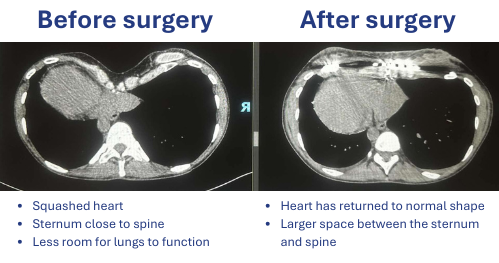
CT scans showing before (L) and after (R) pectus surgery
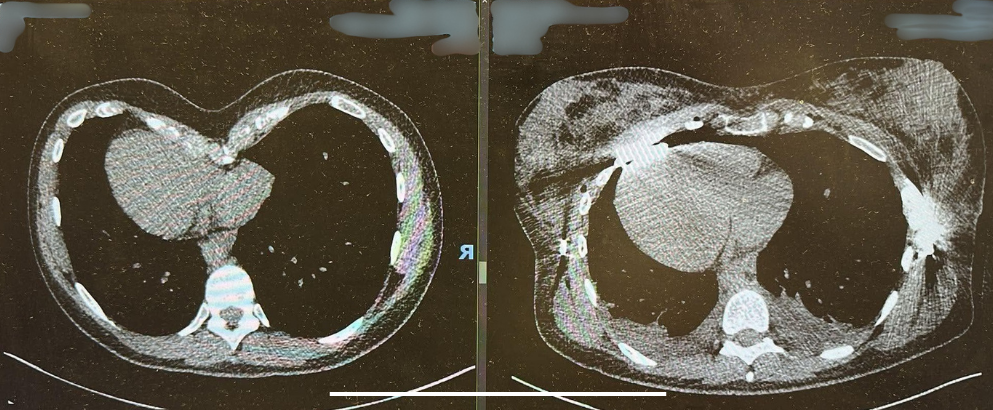
CT scans showing before (L) and after (R) pectus surgery
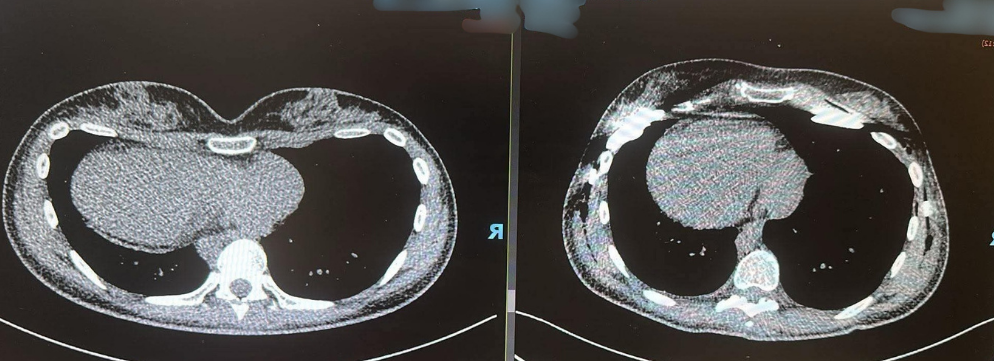
Before
After
The NUSS procedure
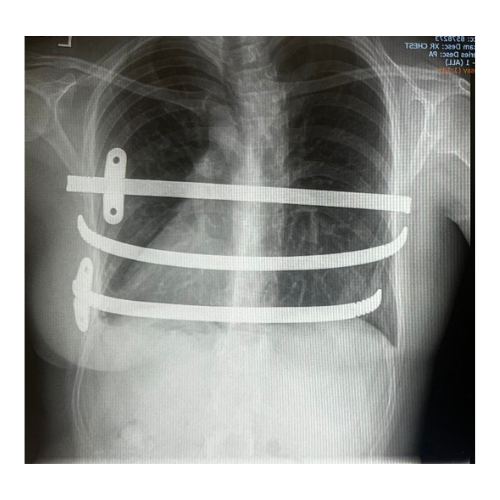
The NUSS procedure involves surgery to place between one and four metal bars in the chest, to elevate the sternum of patients with pectus excavatum. Small incisions are made on either side of the chest through which a small camera and the curved metal bars are inserted. The sternum is elevated by either flipping the metal bars or with a surgical crane, both of which lift the chest to correct the pectus deformity. The bars are then secured in place using either sutures or metal stabilisers. You may have chest drains fitted during surgery, to remove any excess fluid. These will then be removed in the days following surgery, once the fluid has drained.
The NUSS procedure is a minimally invasive operation, which uses small incisions causing minimal scarring and reducing the risk of infection. Despite this, it is still major surgery that can be very painful. There are a number of risks and complications that can occur following NUSS surgery, including:
Pneumothorax (collapsed lung)
Bar displacement
Pleural effusion (fluid around the lungs)
Pericarditis
Wound infection
Bleeding
Chronic infection of the surgical site
Chronic pain
Sternal fractures
Pulmonary embolism
Deep vein thrombosis
Recurrence or the deformity or unsatisfactory correction
Failure to improve symptoms
Metal allergy
Damage to surrounding structures (the heart, lungs, nerves, blood vessels)
Low likelihood of catastrophic complications resulting in death
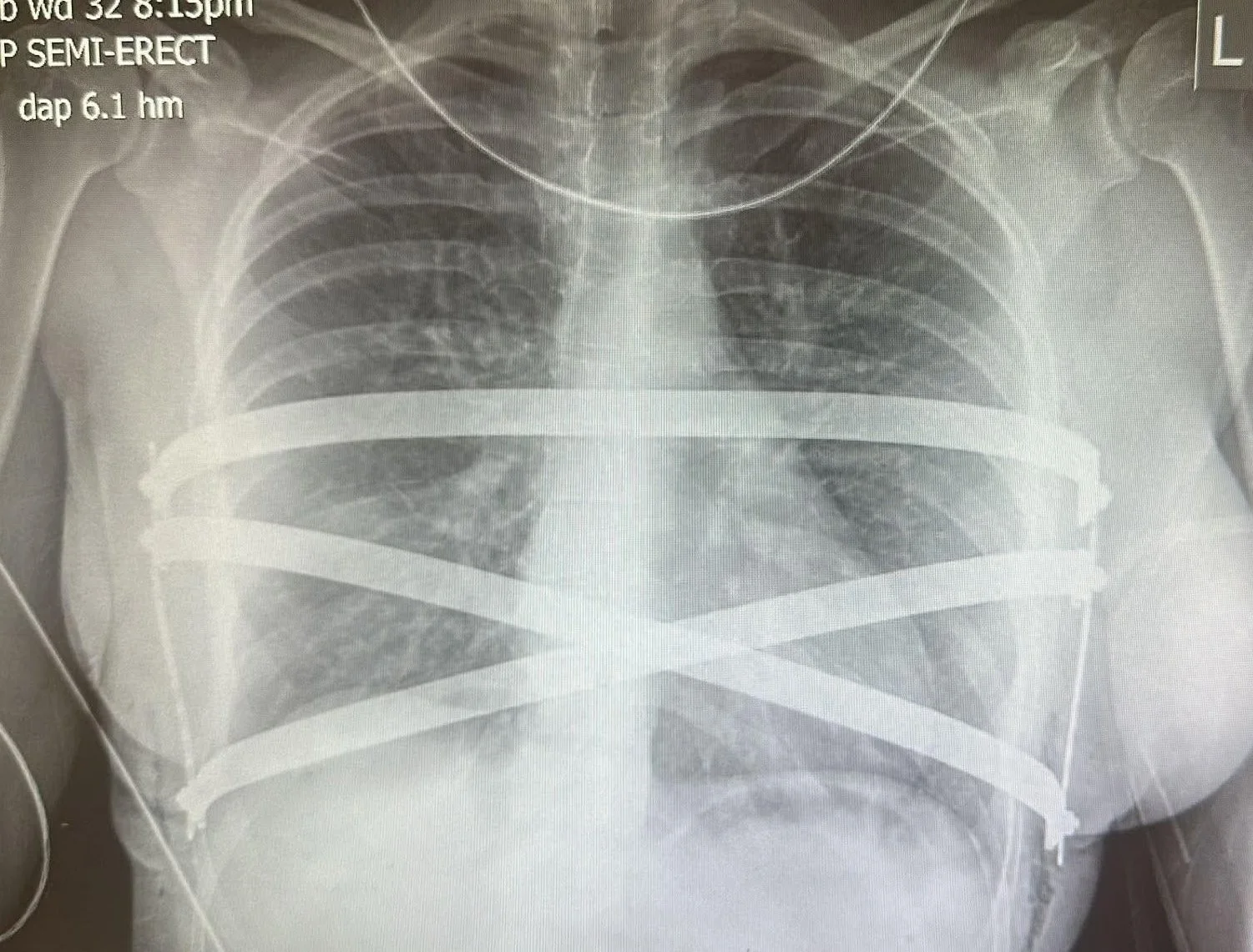
NUSS surgery can be performed at any age but is recommended in late childhood when the sternum is flexible, making it respond better to treatment. As the chest is less flexible the older you are, pectus deformities can be more difficult to correct in adult patients and the risk of experiencing complications increases.
Recovery from the NUSS procedure varies between patients, especially depending on their age. After surgery, patients will spend 2 – 6 days in hospital, where they will receive physiotherapy and support managing their pain levels before being discharged.
In first few the weeks after surgery, patients are encouraged to continue with physiotherapy exercises at home, take short walks (gradually increasing the distance), and slowly decrease the amount of pain killers taken. After surgery, patients will need to sleep on their backs in an elevated position, and may be unable to lie flat or on their sides for a couple of months.
The Cleveland Clinic estimates it takes about 6 months to fully recover from NUSS surgery, but most people will be able to return to normal activity much sooner (excluding heavy lifting and contact sports). Children should find that they can return to school within one month, whilst adults may take longer to return to work (depending on profession).
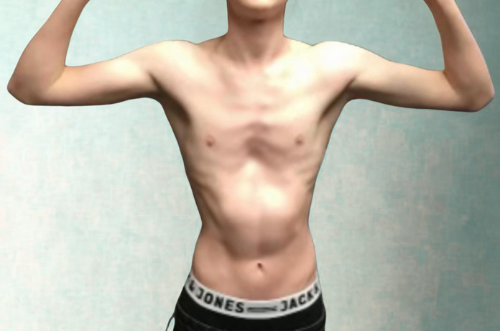
Before NUSS surgery (female)
After NUSS surgery (female)
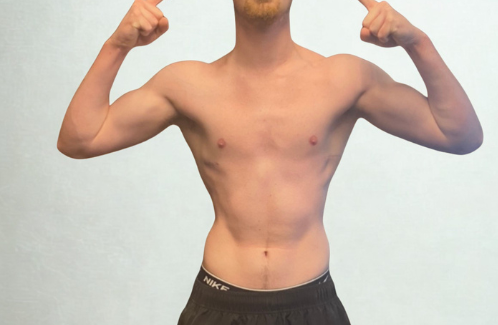
Before NUSS surgery (male)
After NUSS surgery (male)
NUSS bar removal surgery
NUSS bars cannot remain implanted in the chest permanently, and must be removed. Typically, the NUSS bars remain implanted for a period of 3-4 years, before they are removed during a second surgical procedure.
Unlike when the bars are inserted, removal surgery is a much shorter procedure with a quicker and less painful recovery.
Potential risk associated with bar removal surgery include:
Wound infection
Rib fractures (usually associated with bone growth around the bars which make removal of NUSS bars more difficult)
After NUSS bars are removed, most patients find a further improvement in their breathing and reduction in any pain.
The Modified Ravitch procedure
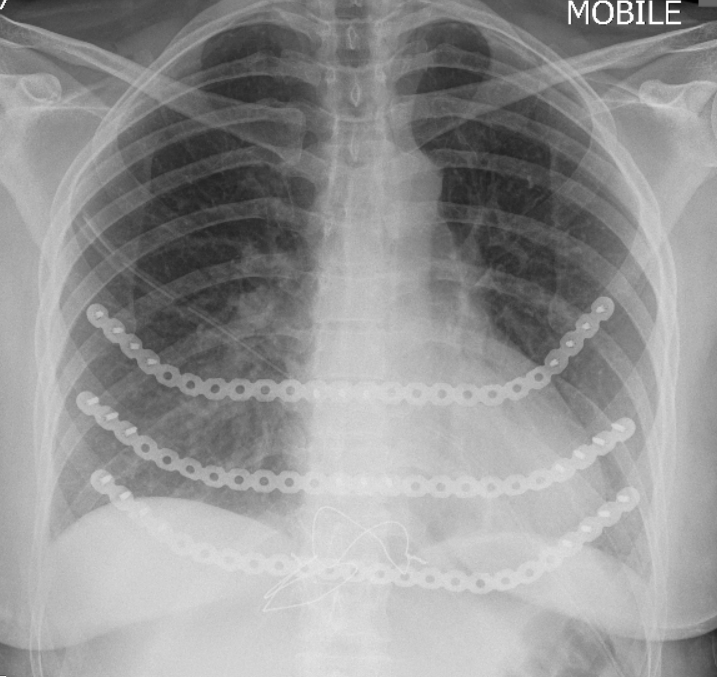
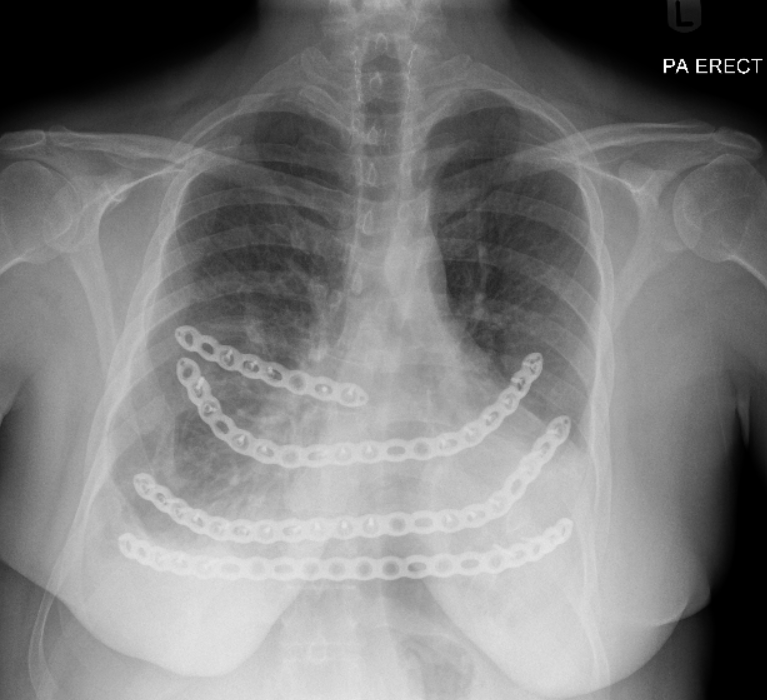
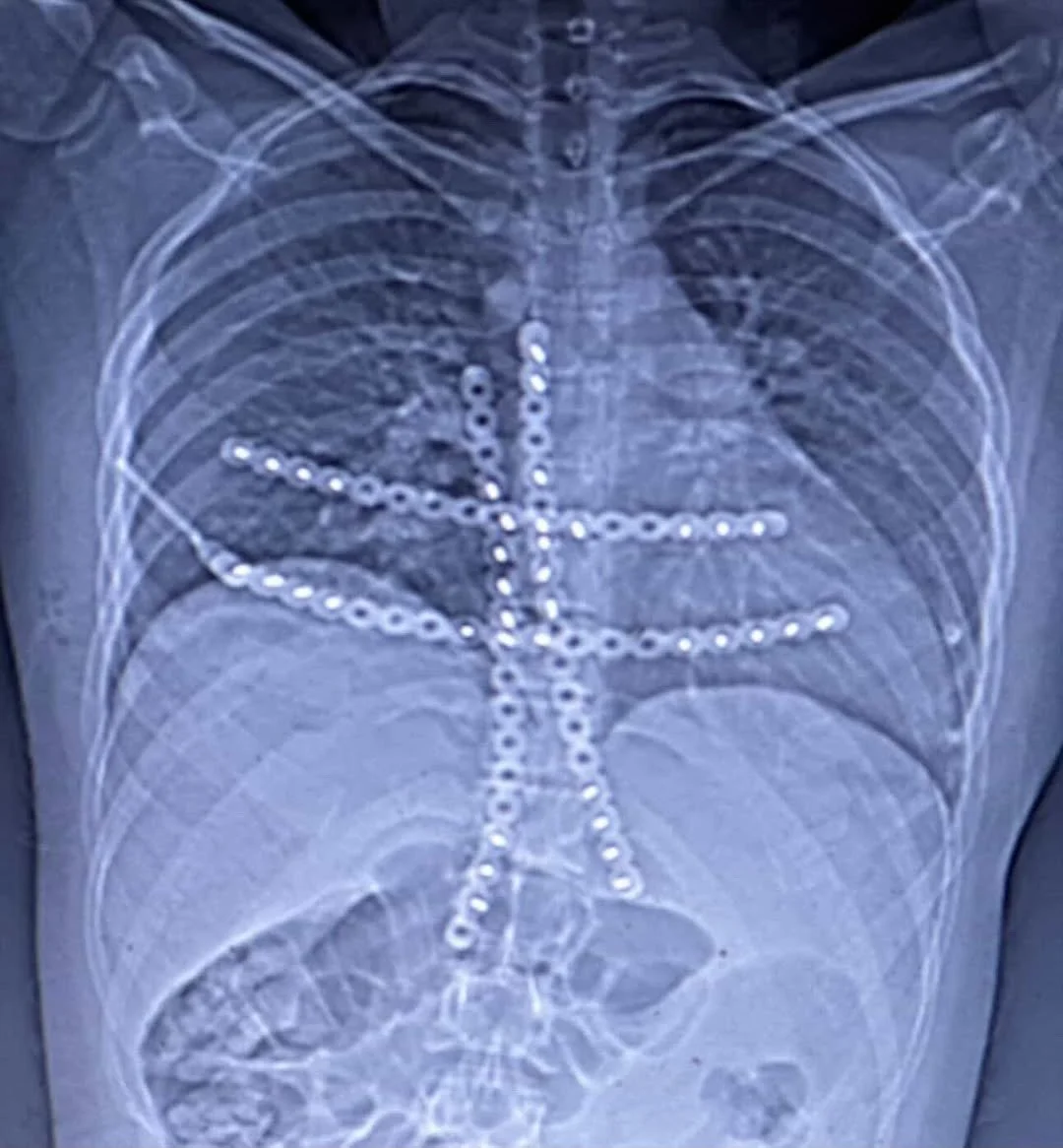
The modified Ravitch procedure is a surgical method used to correct pectus excavatum, carinatum and arcuatum.
The modified Ravitch procedure involves the surgeon making a large incision (vertical or horizontally) across the chest and removing cartilage, before reshaping the sternum by hand. Once the sternum is reshaped, a metal bar or plate are secured to the sternum to hold the repair in place. Chest drains may be fitted during surgery to remove any excess fluid. These will be removed in the days following surgery, once the fluid has drained.
The modified Ravitch is considered a highly invasive surgical procedure, due to the large incision across the chest and manual shaping and resetting of the sternum: unlike the NUSS procedure where the sternum is lifted and metal bars placed through small incisions in the side of the chest. Because it is highly invasive, patients having the Ravitch procedure may expect a longer recovery with an increased risk of infection. Risks and complications associated with the modified Ravitch procedure are:
Pneumothorax (collapsed lung)
Bar displacement
Pleural effusion (fluid around the lungs)
Pericarditis
Wound infection
Bleeding
Chronic infection of the surgical site
Chronic pain
Sternal fractures
Pulmonary embolism
Deep vein thrombosis
Recurrence or the deformity
Metal allergy
Recurrence or the deformity or unsatisfactory correction
Failure to improve symptoms
Damage to surrounding structures (the heart, lungs, nerves, blood vessels)
Low likelihood of catastrophic complications resulting in death
Because the modified Ravitch procedure gives the surgeon the ability to shape the sternum by hand, it is sometimes chosen as the preferred option for operating on older patients, or those with more complex pectus deformities. Despite this, patients of any age can have the Ravitch procedure. In patients with Pectus Excavatum, some surgeons continue to practice the modified Ravitch over the NUSS procedure, as they have more experience with the Ravitch and feel more confident using this technique.
There are a number of other reasons why a cardiothoracic surgeon would choose the Ravitch procedure over the NUSS. These include:
Pectus carinatum
A complex or asymmetrical pectus excavatum
Previously failed repair
Unlike the NUSS procedure, patients having the modified Ravitch don’t usually need a second surgery. Typically, the metal plates and bars used remain within the chest. Sometimes a surgeon may choose to place a NUSS bar for additional support during a Ravitch procedure; if this happens, then the NUSS bar will need to be removed after 3 or 4 years.
PectusUp
PectusUp is the newest of the surgical methods: used for correcting pectus excavatum.
During the PectusUp procedure, the surgeon makes a small incision across the front of the chest and attaches a stainless steel plate on top of the sternum. A specialised elevation system is then attached to the sternal plate, which is used to lift the sternum into a corrected position. Whilst the NUSS and modified Ravitch procedures require metal implants to be inserted underneath the sternum, the PectusUp implant is placed extrathoracically, making surgery less invasive, thereby reducing the recovery time.
The PectusUp procedure is suitable for patients of all ages, but is typically only offered to patients with moderate to severe pectus excavatum. If you have a more severe or asymmetrical deformity, PectusUp is less likely to be successful at correcting the shape of your sternum, and a more invasive surgical method is more likely to be recommended.
The PectusUp implant must remain in the sternum for a minimum of two years. In adult patients, the implant can remain attached to the sternum permanently, but can be removed at the patient’s request and surgeon’s discretion after two years. In child or adolescent patients, the PectusUp implant may be replaced with a different size if a very significant period of growth occurs. If this is the case, the surgeon would consider replacing the implant with one better fitted to the new size of the sternum.
Risks and complications associated with PectusUp are:
Seroma
Metal allergy
Surgical site infection
Wound infection
Insufficient correction of the deformity
As the PectusUp procedure is much newer, it is typically only available in the UK privately or as part of a clinical trial. More information about the PectusUp procedure can be found here.
Pectus implants
Patients wanting a purely cosmetic fix, pectus implants are a surgical option which can disguise pectus excavatum or arcuatum, without changing the abnormal shape of the sternum underneath. For patients experiencing no physical symptoms from their pectus deformity, implants can offer a cosmetic solution.
Pectus implants are made-to-measure silicone implants which fill the space in the chest created by pectus excavatum, arcuatum, or a mixed deformity. Implants can stay in place for life due to their solid composition, which does not create capsular contracture (often seen in breast implant surgery).
Surgery to fit a pectus implant is a quick procedure, requiring a small incision across the front of the chest and the placement of an implant under the skin, soft tissue, and muscle layer in front of the breast bone. As surgery is less intrusive and doesn’t require the reshaping on the sternum, recovery is quicker than the NUSS or Ravitch procedure.
Risks and complications associated with pectus implants are:
Seroma
Bruising and swelling
Pain and altered sensation around the incision
Scarring
Haematom
Wound infection
Implant displacement or migration
Chronic pain
Permanent numbness or altered nipple sensation
Unsatisfactory cosmetic result requiring revision or implant removal
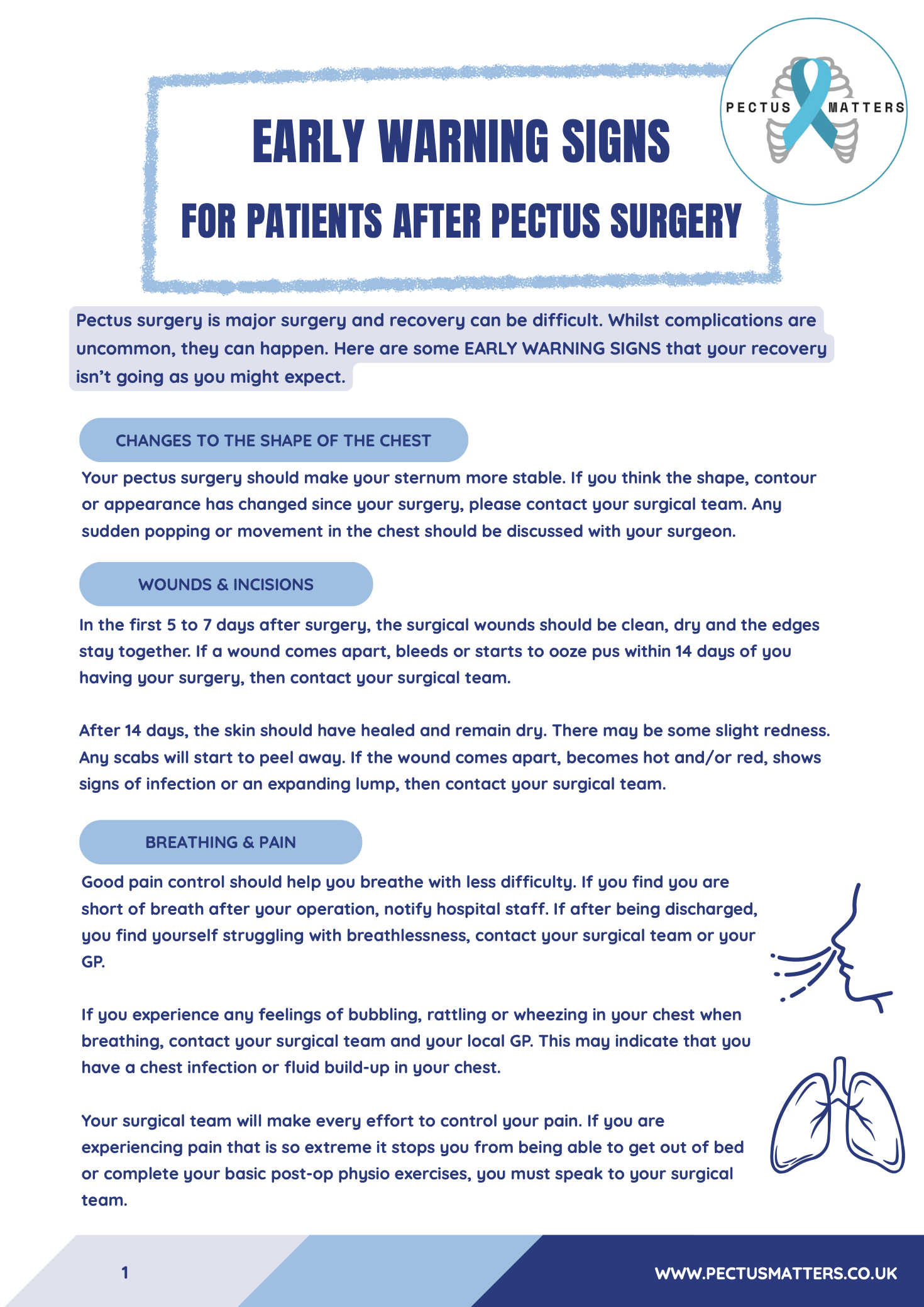
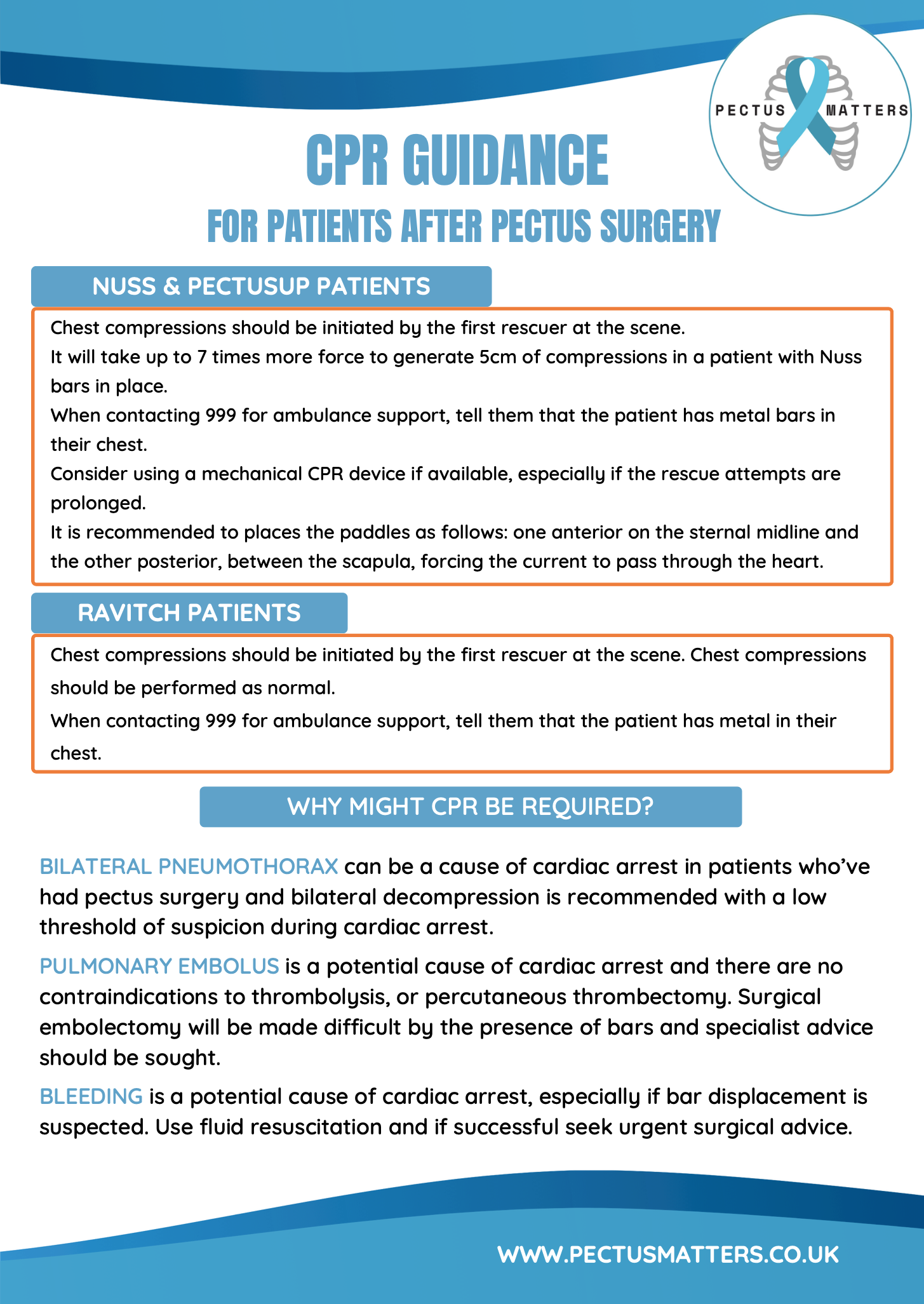
If you’re having pectus surgery, why not download our list of Early Warning Signs and CPR Guidance?
You can also apply to receive our post-op support pack which includes:
Medical ID bracelet
One-year membership to MedicAlert’s first responder service
CPR guidance
Physiotherapy advice
List of Early Warning Signs